Hearing the words “it’s Parkinson’s”
Take a breath. Nearly 1.1 million people in the United States are living with Parkinson’s disease right now, and that number is expected to grow to about 1.2 million by 2030, according to the Parkinson’s Foundation. This diagnosis usually arrives later in life, often around age 70, and while the road ahead will look different, it does not have to mean giving up the things that make home feel like home.
Families all over San Diego County are walking this same path. Many find that with the right support in place, their loved one can still enjoy morning coffee on the patio, familiar routines, and time with family, safely and with dignity.

How Parkinson’s affects daily routines
Parkinson’s is a brain disorder that affects movement and slowly changes over time. It happens when certain brain cells that help control muscle movement break down and stop making enough dopamine, a chemical messenger the brain uses to send signals to the body, according to the Mayo Clinic. This is not something anyone caused or could have prevented.
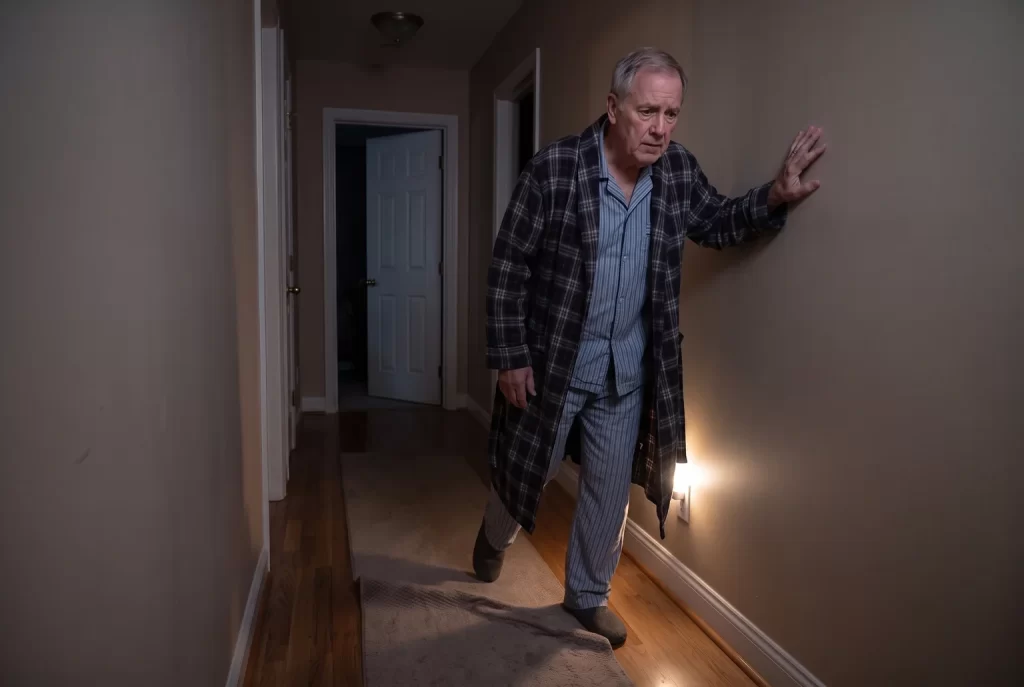
For many families, the first sign is small: a slight shake in one hand while resting. In fact, about 70% of people with Parkinson’s notice hand tremor first. Over time, other movement changes often follow, including muscle stiffness, slower movement, and difficulty with balance and walking. These balance issues can make everyday tasks, like getting up from a chair or walking to the bathroom at night, feel unsteady and increase the risk of falls.
Parkinson’s also brings changes that are harder to see. Fatigue, sleep trouble, and slowed thinking are common, along with mood changes like anxiety or low motivation, according to the Parkinson’s Foundation. Some people also notice softer speech or trouble swallowing.
None of these changes happen all at once, and no two people experience them the same way. But together, they can make ordinary parts of the day, dressing, cooking, remembering appointments, take more time and more effort than before. Understanding this is the first step toward finding the right kind of support at home.
What a caregiver actually does at home
A non-medical caregiver is not a nurse and does not manage medications or treatments. What they bring is steady, hands-on help with the parts of the day that have become harder, along with real companionship.
Mornings often start with dressing and grooming. A caregiver might lay out clothes that are easier to fasten, offer a steadying hand, or stand nearby so bathing feels safer, using grab bars or a shower stool when needed, according to WebMD. The goal is always to let your loved one do as much as they can on their own. Dignity means being involved in your own routine, not having it taken over by others.
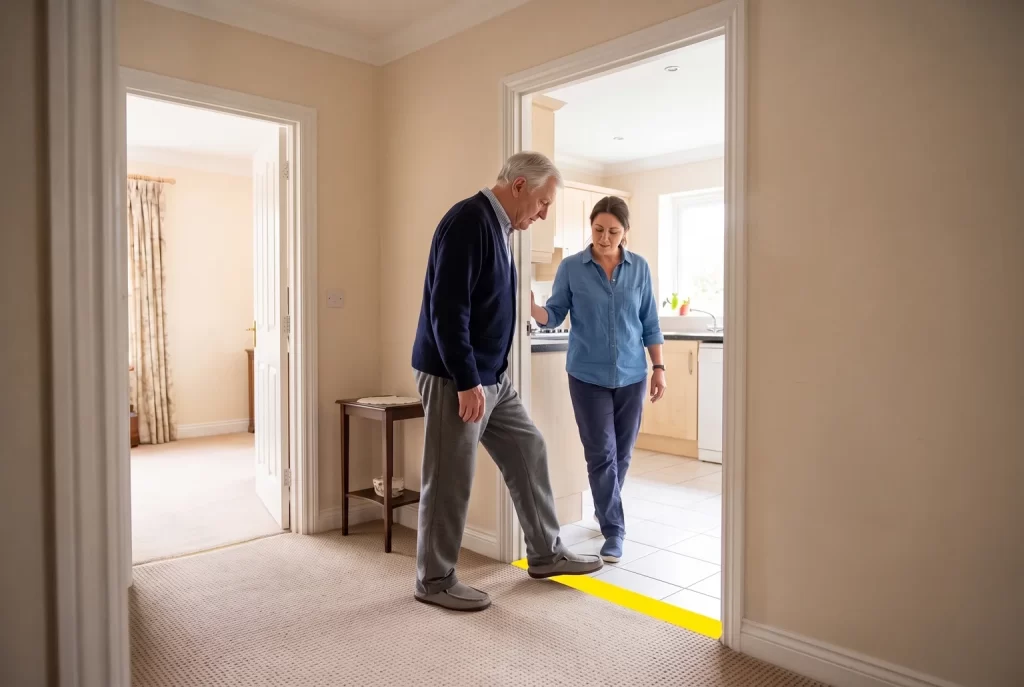
Falls are one of the biggest safety concerns with Parkinson’s. Caregivers help by keeping walkways clear, encouraging supportive, non-slip shoes, and staying close during turns or when walking through doorways, where freezing episodes are more likely, notes the Parkinson’s Foundation. Simple cues, like counting steps or pausing before a threshold, can help someone move through a tricky moment instead of feeling stuck.
Meals are another place where small adjustments matter. A caregiver can prepare food that’s easier to chew or swallow, use adaptive utensils, and keep the kitchen organized so meals stay something to look forward to rather than a struggle.
Caregivers also help with medication reminders. That means gently prompting someone that it’s time to take their pills, not administering them or making medical decisions. If something seems off, like new dizziness or unsteadiness, a good caregiver will let the family know rather than trying to adjust anything themselves.
And then there is the part that’s harder to measure: sitting together over coffee, talking about the news, playing cards. For someone whose world has grown smaller, that steady presence often matters as much as any physical task.
Caring for someone you love, without losing yourself
If you feel worn thin, you are not imagining it. Recent survey data shows that 64% of family caregivers report high emotional stress and 45% report high physical strain. More than half say caregiving makes it hard to take care of their own mental health, and nearly four in ten rarely or never relax, according to AARP.
You can love your parent or spouse completely and still feel exhausted. Those two things are not in conflict. The tiredness you feel after another sleepless night, the guilt that creeps in when you want an hour to yourself, none of it means you are failing. It means you are human and you have been carrying a lot alone.
Bringing in an in-home caregiver does not mean stepping back from your loved one’s life. It means having someone trustworthy handle the physical and daily tasks so you can go back to being a spouse or a family member instead of a full-time aide. Many families find they show up better emotionally once they are not stretched so thin physically.
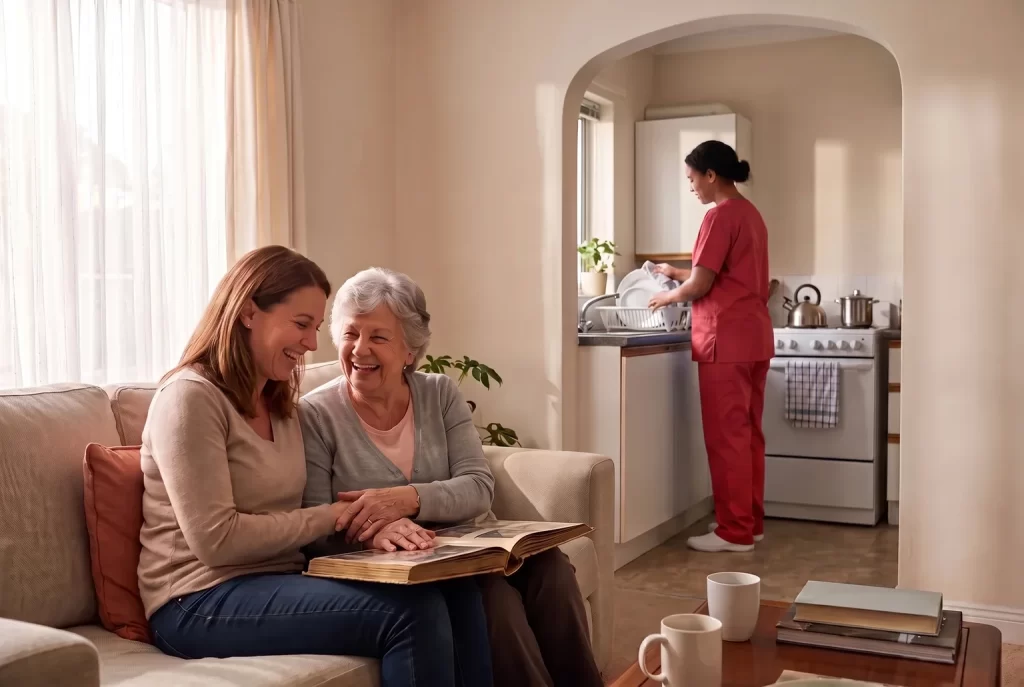
Real relief often starts with a few hours a week. That small amount of breathing room can be the difference between resentment and connection.
Recognizing when it’s time for more help
It can be hard to know exactly when to ask for extra support. There is no single moment that makes it obvious, but a few patterns tend to show up again and again for families living with Parkinson’s.
Watch for these signs:
- Stumbling, near-falls, or growing unsteadiness on stairs or uneven ground
- Bathing, dressing, or getting out of bed alone starts to feel unsafe or exhausting
- Missed meals, weight loss, or trouble keeping up with daily routines
- Confusion around appointments, medication schedules, or getting turned around in familiar places
- Withdrawing from friends, hobbies, or outings they used to enjoy
- Trouble getting to appointments or errands without help
The Parkinson’s Foundation points to falls, getting lost, and mixed-up medication routines as clear safety signals that more support is needed. Difficulty staying active or social is another sign worth paying attention to, since isolation tends to grow as symptoms progress.
These signs are not a verdict. They are simply information that helps you make a caring decision at the right time, rather than waiting for a crisis to force the issue.
The same goes for you. If you feel worn down, are missing your own appointments, or find it hard to hold your own life together while caregiving, the Parkinson’s Foundation is clear that this is reason enough to bring in help.

A local team that knows Parkinson’s care
Interim HealthCare of La Jolla serves families along the San Diego County coast, from La Jolla and Pacific Beach to Coronado, Poway, and Mission Valley. That local presence matters when you’re trying to coordinate care for a parent or spouse. You’re not calling a national hotline. You’re talking with people who know the neighborhoods, the traffic patterns, and the pace of life here.
Our caregivers are state-certified home care aides, not nurses, and their role is to support daily living safely and with dignity. Some caregivers bring specific experience with Parkinson’s, understanding things like the importance of steady routines, the risk of falls, and how fatigue can shift from morning to afternoon.
Every family’s situation looks different, so care plans are built around what your loved one actually needs, whether that’s a few hours of help in the mornings or more consistent daily support.

If you want to talk through what support could look like for your family, their team is reachable directly at (858) 422-0770.
Talk with someone who understands what you’re facing
You do not have to figure this out on your own, and you do not have to commit to anything today. A free consultation with Interim HealthCare of La Jolla is simply a conversation. You can share what your loved one is going through, ask questions, and hear what kind of support might fit your situation.
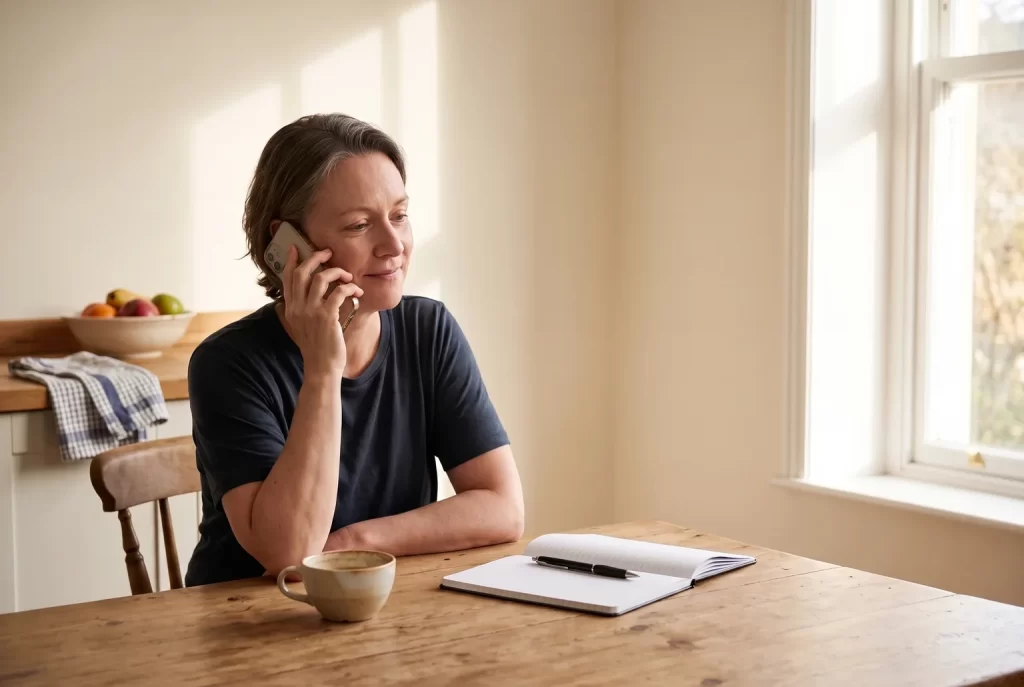
Parkinson’s changes daily life, but it does not have to mean losing support, connection, or hope.
There is no pressure and no obligation. Just an honest talk with someone who has helped many families in San Diego County walk this same path.
Call +1 (858) 422-0770 to schedule your free consultation and take one small step toward more peace of mind for your whole family.